Pages

Thursday, March 31, 2011

Nupur - Star Photographer of the Month!!

AddiQtd is glad to announce painter Nupur Chowdhury as the Star Photographer of the Month for the month of March 2011. The visitors and administrators of AddiQtd photoPlace online community have liked Nupur's paintings and viewers from all over the globe have mailed us about Nupur's paintings. Its unfortunate that this brilliant painter remains out of touch due to her tough schedules, but from our part, its our pleasure to have her in AddiQtd PhotoPlace. We hope to see more photographs of her paintings soon.

Visit the AddiQtd PhotoPlace to see Nupur's paintings.

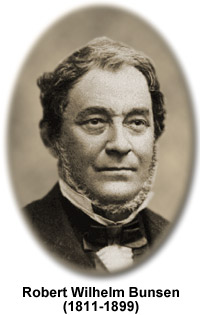
Robert Bunsen at 200!!


Today is the 200th birthday of the German chemist Robert Wilhelm Bunsen.
Bunsen, along with his laboratory assistant Peter Desaga, developed the Bunsen burner, a commonly used laboratory equipment used for heating.
Robert Bunsen was born on March 31, 1811 in Gottingen, Germany. In 1830 he received a Phd in chemistry at the University of Göttingen. After teaching at a number of universities in Germany, he went on to be professor at Heidelberg in 1852, a post he held till his death on August 16, 1899. Bunsen never married.
Among the many inventions credited to his name are the carbon-zinc electric cell, the filter pump, the ice calorimetre and the vapour calorimeter.

Paul Baran dies at 84...

Paul Baran, the person who brought the world together left the world on 26th March. Baran invented and developed the "packet switching" technology which speed up the internet and changed the face of the web. 


Today we speak of high data transfers and data security with billions of websites opening simultaneously around the globe. Paul Baran has been the pioneer of the development of this technology and has been awarded for his excellence  - IEEE Alexander Graham Bell Medal,National Medal of Technology and Innovation, National Inventors Hall of Fame.


Paul Baran died in Palo Alto, California at the age of 84 due to complications from lung cancer. Upon his death James Thomson, the president of RAND stated that "Our world is a better place for the technologies Paul Baran invented and developed, and also because of his consistent concern with appropriate public policies for their use.". One of the fathers of the internet, Vinton Cerf, stated that "Paul wasn't afraid to go in directions counter to what everyone else thought was the right or only thing to do,"

Wednesday, March 30, 2011

Condom makes a Player or a Slut?!!

Some people think they look smart if they carry a condom on a date. Few surveys show that most of the girls think that guys carrying condoms are smart and prepared. While few girls think that he's a cool player; unlike the remaining percentage of girls who think such guys to be looking for only sex and trying to be cool.
To our amazement, when the same question has been asked to boys about girls who carry condoms or offer condoms -  most of the guys think 'she is smart and prepared'. Few narrow minded boys believe it to be a golden opportunity to fuck a girl who is 'looking for sex'. The remaining boys call such girls - slut!

So you know, many people still belong to the old stereotypes, being busy in judging what a person looks like while carrying a condom. However, it is much more important to stay safe and play safe than being scrutinized upon carrying condoms.

So friends, saying "it just happened" and feeling romantic is not the way to keep sex healthy. Think and talk about condoms even before sleeping with your partner! It doesn't actually matter if you look like a player or a slut; being wise and using precaution is what matters. Fuck the rest!

Monday, March 28, 2011

The USB Story!!

We cannot think of life without data, and when it comes to data, we cannot ignore USB devices like pen drives, memory devices or external plug n play devices like game controllers or printers. Even cellphones come with USB connectivity. Many of us know that Ajay Bhatt invented the Universal Serial Bus (USB) while working in Intel. But here is some more fun fact about the invention of USB.


 It began development in 1994 by a group of seven companies: Compaq, DEC, IBM, Intel, Microsoft,NEC and Nortel. it was intended to make it fundamentally easier to connect external devices to PCs by replacing the multitude of connectors at the back of PCs, addressing the usability issues of existing interfaces, and simplifying software configuration of all devices connected to USB, as well as permitting greater bandwidths for external devices. The first silicon for USB was made by Intel in 1995.
The USB 1.0 specification was introduced in January 1996. The original USB 1.0 specification had a data transfer rate of 1.5 Mbit/s. The first widely used version of USB was 1.1, which was released in September 1998. It allowed for a 12 Mbit/s data rate for higher-speed devices such as disk drives, and a lower 1.5 Mbit/s rate for low bandwidth devices such as joysticks.
The USB 2.0 specification was released in April 2000 and was standardized by the USB-IF at the end of 2001. Hewlett-Packard, Intel, Lucent Technologies (now Alcatel-Lucent), NEC and Philips jointly led the initiative to develop a higher data transfer rate, with the resulting specification achieving 480 Mbit/s, a fortyfold increase over 12 Mbit/s for the original USB 1.1.
The USB 3.0 Specification was published in 12 November 2008. Its main goals were to increase data transfer rate (up to 5Gbps), decrease power consumption, increase power output and be backwards compatible with USB 2.0. USB 3.0 includes a new, higher speed bus called SuperSpeed in parallel with the USB 2.0 bus. For this reason, the new version is also called SuperSpeed. The first USB 3.0 equipped devices were presented in January 2010.
USB implements connections to storage devices using a set of standards called the USB mass storage device class (referred to as MSC or UMS). This was initially intended for traditional magnetic and optical drives, but has been extended to support a wide variety of devices, particularly flash drives.
Sleep-and-charge USB ports can be used to charge electronic devices even when the computer is switched off. Normally when a computer is powered off the USB ports are powered down. This prevents phones and other devices from being able to charge unless the computer is powered on. Sleep-and-charge USB ports remain powered even when the computer is off. On laptops charging devices from the USB port when it is not being powered from AC will drain the laptop battery faster. Desktop machines need to remain plugged into AC power for Sleep-and-charge to work.

Information resource: wikipedia